
August 20, 2026
MOVIE THEATERS
This summer, Christopher Nolan's The Odyssey created a cultural argument that almost never occurs for movies: what is the best way to watch the film? Since the COVID-19 pandemic, most discussions surrounding the movies speculate about declining theater attendance, a subject we explored in an earlier episode, not which of the six available formats offers the best theatrical experience. Most of us are too young to remember that, originally, no one ever planned to go to the movies. The entire moviegoing experience was changed forever by one persnickety director.
On June 19, 1905, about 450 people paid five cents to watch a few, short, silent films in Pittsburgh, Pennsylvania. The venue would be named the Pittsburgh Nickelodeon, blending the price of admission with the Greek word for "theater." Within months, nickelodeons opened all across the country. Typically open from dawn until midnight, patrons could enter the theater at any time and stay as long as they liked. It wasn't a show, like a play; it was an event; like a country fair.
As film technology advanced and movies became longer, studio executives, film directors, and theater owners exchanged ideas and debates over how movies should be properly viewed. But no one could change the American perception that movies were a novelty and should be enjoyed whenever and however the viewer wanted. By the 1940s, nickelodeons would routinely show a newsreel, cartoon, comedy short, and longer film on a loop. Customers would enter at any time and generally leave when they recognized the point at which they had arrived.
A failed marketing campaign in 1937 tried to encourage movie start times. Premieres of both Mildred Pierce (1945) and All About Eve (1950) threatened to not seat patrons after the movie started in order to not ruin surprise plot twists, but both caved when they realized they could not change the "half-century-old habit of patrons going to the movies on the impulse of the moment."
Enter Jerry Pickman, Paramount's vice president of advertising and publicity. After viewing Alfred Hitchcock's newest film in 1960, Psycho, he decided that the movie had to be watched start-to-finish in one sitting. And he had the power to make that happen. He used Hitchcock's stern image to create life-size posters that theaters could display to announce this new "no late admissions" policy.
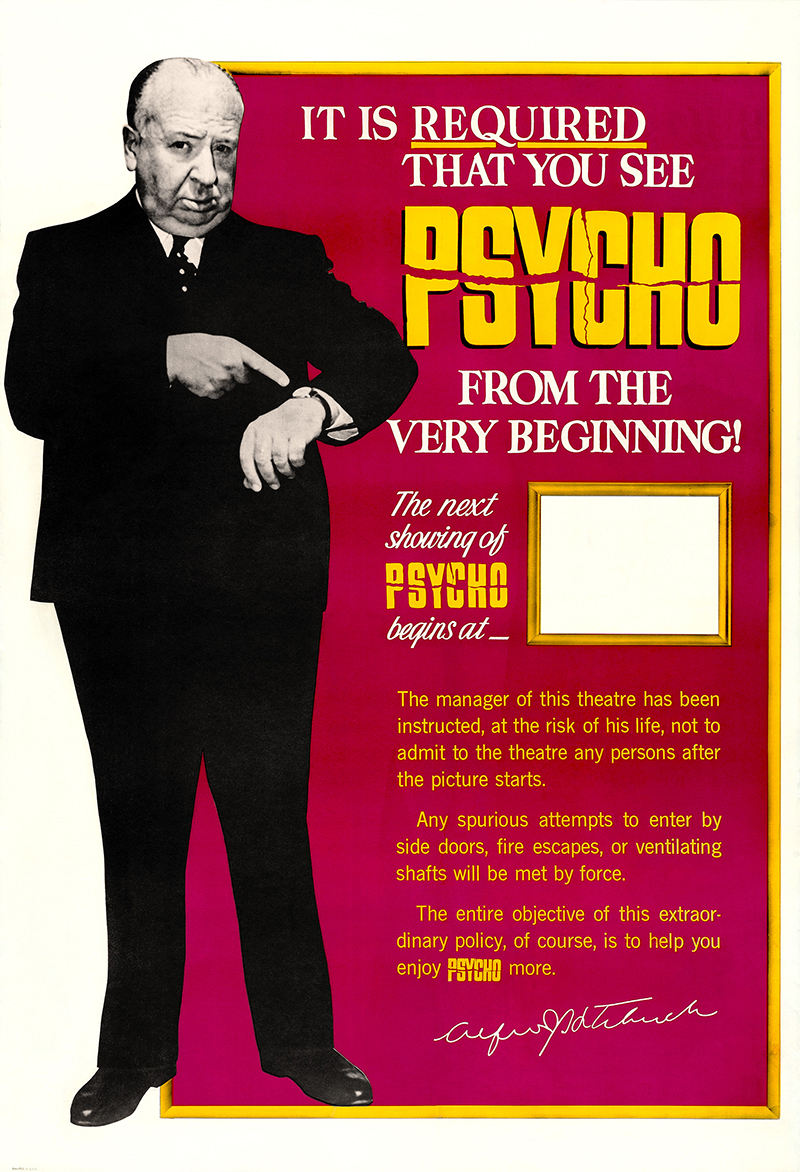
On June 16, 1960, the first scheduled movie start time began. Uniformed guards were hired to ensure patrons obeyed the new policy. For the first time, the movie theater operated on a regimented schedule, cleaning the rows between showings, and selling more tickets than they ever had before. Lines formed outside theaters, a sight that had never been witnessed, and that image rebranded the movie as a "must-see" spectacle. With one targeted, determined ad campaign, the movie theater industry changed from a "grind policy" (running all movies on a continuous loop) to something new called "fill and spill" (having tightly staggered showtimes that allowed just enough time to usher audiences in and out of the theater).
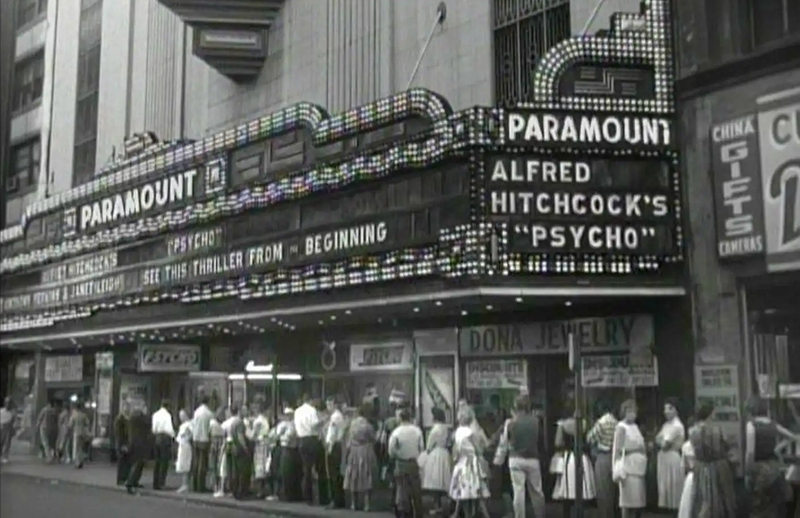
People form a line to see the premiere of Psycho outside the Paramount Theatre in Boston, Massachusetts, on June 16, 1960.
Audiences quickly grew to appreciate the new format because it elevated movies to an art form on par with plays and ballets. Theaters loved the new format because it allowed them to sell more tickets and control crowds. And movie studios loved the new format because it increased their revenue and paved the way for the "blockbuster." All the conversations we're having right now about The Odyssey can be traced back to Psycho, because the way that one movie was marketed changed the entire industry forever.
SOURCES
- "The Odyssey Format Wars: 6 Different Ways to Watch a Movie" from Arizona's Family
- "Pioneering Nickelodeon Theater Opens" from History
- "How Hitchcock's 'Psycho' Changed How We Watch Movies in Theaters Forever" from No Film School
- "When Moviegoers Started Watching Films From the Beginning" from The Hollywood Reporter
- All images are public domain
LISTEN
SUBSCRIBE





